
新闻中心
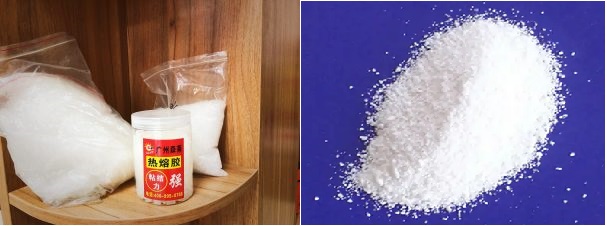
Heavy calcium carbonate (CaCO3) in hot melt adhesive is a commonly used filler that can increase the hardness of colloids, improve their wear resistance and stability, and reduce costs. However, in the hot melt adhesive system, due to its high density, heavy calcium is prone to settling, leading to segregation, that is, the separation of heavy calcium particles from the colloid, which affects the uniformity of the product and the final bonding effect. To reduce or avoid the segregation of heavy calcium in hot melt adhesive, the following measures can be taken:
When using heavy calcium as a filler in hot melt adhesive, it is important to choose a suitable dispersant to prevent the aggregation and segregation of the filler. Hot melt adhesive systems are usually heat sensitive and may experience high shear stress during use, so dispersants need to be able to stabilize the dispersion state of heavy calcium under such conditions. Here are some types of dispersants that may be used in hot melt adhesive systems:
When selecting a specific dispersant, it is necessary to consider the specific components of the hot melt adhesive (such as EVA, polyolefin, etc.), as well as the application environment of the hot melt adhesive (such as temperature, shear conditions, etc.). In addition, compatibility between dispersants and heavy calcium and other components should also be considered to ensure that dispersants can effectively function without affecting the overall performance of the hot melt adhesive.
From packaging to various product assemblies, packaging hot melt adhesive can be used in products to achieve stronger bonding between materials. Due to the adhesive properties of packaging hot melt adhesive, this bonding method is more durable than other bonding methods. Hot melt adhesive is one of the few adhesive systems that allows glue applicators […]
Can EVA hot melt adhesive be reused? Hot melt adhesive is widely used in industries such as electronic components, metals, wood, toys, furniture, handicrafts, paper products, textiles, packaging, etc., all of which require hot melt adhesive. Someone asked before: Can EVA hot melt adhesive be reused? If it can be reused repeatedly, isn’t the economic […]
plum rain seasonHot melt adhesive granulesAgglomeration, mostly not due to glue spoilage, but ratherMoisture absorption+temperature fluctuationCausing mutual adhesion between particle surfaces. The principle of handling is simple: mild adhesion can be spread out and left to air, and after being dispersed, it can be used as usual; If there is obvious moisture absorption, whitening or […]
Direct answer: The reason for the broken glue when flipping pages in the adhesive book is that the glue layer has not penetrated into the back of the book and the glue layer is brittle. The solution needs to start from four aspects – milling and slotting should be in place, the temperature and amount […]