
新闻中心
In the adhesive industry, rosin and modified materials are the most commonly used thickeners. Today, we will share some performance indicators of these resins:
Rosin
① Name and characteristics
Chinese alias: Tar rosin; Raw rosin.
English name: Rosin.
English alias: Symphony.
Rosin is a transparent solid that is slightly yellow to yellow red in color, with a hard and brittle texture. Easy to oxidize in the air and darken in color. Can dissolve in ethanol, ether, acetone, toluene, carbon disulfide, dichloroethane, turpentine, petroleum ether, gasoline, and alkaline solutions. Reduced solubility in gasoline. Insoluble in cold water, slightly soluble in hot water. Rosin is a complex mixture of various diterpenoid resin acids, as well as small amounts of fatty acids and neutral substances, made from pine resin, seeds, or wood pulp oil. Its amount varies depending on the type of rosin. Rosin also has crystallization characteristics and is prone to crystallization. It tends to crystallize in organic solvents such as acetone. The critical temperature for crystallization is about 100 ℃, and the melting point of crystalline rosin is 110-135 ℃, which is difficult to saponification. In addition, rosin also has optical activity, with a specific rotation value controlled between 0 ° and 15 ° (the optimal point is 7 °), which is the rosin with no crystallization phenomenon and the lowest crystallization trend. The main component of rosin is resin acid, accounting for about 90%.
② Chemical formula or molecular formula and structural formula Molecular formula: C19H29 COOH.
③ Physical and chemical properties and quality indicators melting point: 110-135 ℃. Boiling point: 300 ℃ (0.67kPa). Flash point: 187.8 ℃. Density: 1.060-1.085g/cm3. Glass transition temperature (Tg): -30 to 38 ℃. Refractive index: 1.5453. Ignition point: 480-500 ℃.
④ Rosin is commonly used as a thickening resin in hot melt, pressure-sensitive, and solvent based adhesives to increase initial viscosity and improve adhesive strength. Rosin can also improve the dryness and peel strength of water-based acrylic resin coated adhesive, and the optimal dosage is 6% of the total monomer amount.
Hydrogenated rosin
① Name and characteristics
English name: Hydrogenated Rosin.
English alias: symphony, hydrogenated; rosin,partiallyhydrogenated。
CAS number: 65997-06-0.
Rosin can be partially or completely saturated with hydrogen gas. Rosin partially saturated with hydrogen is called dihydro rosin, commonly known as hydrogenated rosin. Tetrahydrogenated rosin, also known as fully hydrogenated rosin, is completely saturated with hydrogen. Hydrogenated rosin has a lighter color, higher antioxidant properties, does not oxidize in air, is less prone to discoloration under light, reduces brittleness, has no tendency to crystallize, increases solubility, improves initial viscosity, compatibility, adhesion, and aging resistance. Hydrogenated rosin is an amorphous transparent solid resin containing 75% dihydroabietic acid. Dissolve in ethanol, acetone, dichloroethane, carbon disulfide, toluene, turpentine, petroleum ether, solvent gasoline, and vegetable oil.
② Chemical formula or molecular formula and structural formula
Molecular formula: C19H31COOH (hydrogenated rosin); C19H33COOH (tetrahydroabietic acid).
Molecular weight: 304.46 (hydrogenated rosin); 306.47 (tetrahydrorosin).
③ The physical and chemical properties and quality indicators of hydrogenated rosin are shown in the table
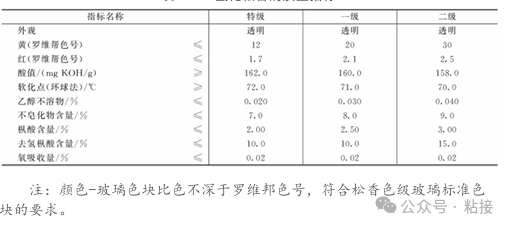
④ The main use is as a thickening resin for hot melt, pressure-sensitive, and rubber adhesives. It does not change color, is resistant to aging, and has strong adhesion. The reference dosage is 5% to 50%. It is also used in coatings, inks, electronic industry fluxes, and other fields.
⑤ Environmentally friendly, safe and non-toxic, rat oral LD50=7600mg/kg.
Polymer rosin
① Name and characteristics
English name: polymerized rosin.
English alias: rosin, polymerized.
CAS number: 65997-05-9. Yellow brown amorphous solid.
Polymer rosin is mainly composed of dimers and contains a mixture of rosin and rosin hydrocarbons. It has the characteristics of light color, high softening point, non crystallization, high acid value, low content of hot water soluble substances, good oil solubility, and light discoloration of lead acetate. Dimer accounts for 20% to 50%, which is relatively stable and not easily oxidized. Dissolve in organic solvents such as toluene, gasoline, petroleum ether, chloroform, dichloroethane, etc.
② Chemical formula or molecular formula and structural formula
Molecular formula: C40H60O4.
③ Physical and chemical properties and quality indicators
Softening point: 90-120 ℃.
Acid value: 150mg KOH/g.
The quality indicators of polymerized rosin are shown in the table
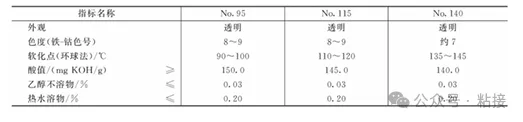
④ Main purpose
Used as a thickening resin in hot melt, pressure-sensitive, and solvent based adhesives, it also has a reinforcing effect. It can improve the adhesive strength, enhance the thermal sensitivity of the adhesive tape, reduce product costs, and partially replace terpene resin and petroleum resin. The comprehensive performance of EVA hot melt adhesive is the best, and the optimal dosage is 50%; Or the dosage is 120 parts by mass, with the highest peel strength.
Disproportionated rosin;
① Name and characteristics
English name: Disproportionated Rosin.
English alias: hydroabietic acid.
CAS number: 1446-61-3.
A transparent glassy solid with a yellowish to yellowish red color and blue purple fluorescence. Disproportionated rosin is a mixture of dehydroabietic acid (C19H27COOH), dihydroabietic acid (C19H31COOH), and tetrahydroabietic acid (C19H33COOH). Dissolve in organic solvents such as toluene and gasoline.
② Chemical formula or molecular formula and structural formula Molecular formula: C19H29COOH.
③ Physical and chemical properties and quality indicators
Softening point: ≥ 75 ℃.
Boiling point: 265 ℃ (2kPa).
Relative density: 1.067.
Refractive index: 1.5400.
Flash point: 210 ℃.
The product specifications of disproportionated rosin are as follows.
Iodine value: ≤ 20g I2/100g.
Acid value: ≥ 155mg KOH/g.
Residual rosin acid: ≤ 0.5%.
Dehydrated rosin acid: ≥ 48%.
Unsponifiable matter content: ≤ 2.8%.
Mechanical impurity content: ≤ 0.015%.
Softening point: ≥ 75 ℃.
④ Main purpose
Used as a thickening agent for chlorosulfonated polyethylene adhesives, hot melt adhesives, and pressure-sensitive adhesives; It is also widely used in the production of water-soluble pressure-sensitive adhesives, and can also be used in the production of water-based pressure-sensitive adhesives. For example, pressure-sensitive adhesives made from 60 parts by mass of a 70% sodium rosin salt solution, 20 parts by mass of polyvinyl formal, 30 parts by mass of glycerol, 20 parts by mass of vinyl acetate, 50 parts by mass of water, etc. have adhesive properties for paper products, wood, glass, ceramics, and metals. The viscosity of acrylate lotion pressure sensitive adhesive modified by 6% disproportionated rosin was significantly improved. It can also be used as synthetic rubber lotion. It can also be used as a rubber component, plasticizer, and binder. Used as an emulsifier for polymer polymerization of styrene butadiene rubber, chloroprene rubber, nitrile rubber and their latex, ABS, etc., to improve and enhance the performance of rubber.
⑤ Environmentally friendly and safe, this product is non-toxic. It has a stimulating effect on the eyes, respiratory tract, and skin.
Malay rosin;
① Name and characteristics
English name: Maleated Rosin.
Red brown sheet-like amorphous transparent solid. Soluble in acetone, ethyl acetate, and dichloroethane, insoluble in ethanol and solvent gasoline. Maleic rosin, also known as maleic anhydride rosin, is the product of the addition reaction between rosin and maleic anhydride (maleic anhydride). In fact, it is a mixture of over 50% maleic anhydride adducts, about 35% unreacted resin acid, and 10% neutral substances.
② Chemical formula or molecular formula and structural formula
Molecular formula: C24H32O5.
Molecular weight: 400.51.
③ Physical and chemical properties and quality indicators
Melting point: 226-227 ℃.
Softening point: 101-132 ℃.
Relative density: 1.143.
Acid value: 224-226mg KOH/g.
The quality indicators of different types of Malayan rosin are shown in the table
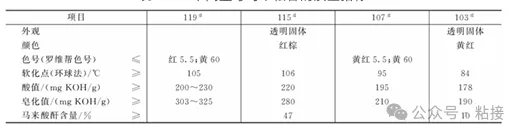
④ Main purpose
A thickening agent used for adhesives. Malay rosin has the characteristics of light resistance, oxidation resistance, and high softening point. Adding 3% of maleic rosin can prevent rosin crystallization. Can form esters with polyols, such as maleic anhydride glycerol ester and maleic anhydride pentaerythritol ester, which are important raw materials for the production of adhesives, coatings, and inks.
Rosin glycerides
① Name and characteristics
Chinese alias: Glycerol rosin ester; Commonly known as ester glue.
English name: glycine abietate; ester gum。
English alias: Frankincense Oil; olibanum oil。
CAS number: 8016-36-2. Transparent liquid, flake or light yellow granular solid, the lighter the color, the better the quality. Soluble in aromatic and aliphatic hydrocarbon solvents (petroleum gasoline, benzene, ethyl acetate, acetone), esters, ketones, and chlorinated hydrocarbons. Compared with rosin, the acid value is significantly reduced, the brittleness and viscosity are reduced, the weather resistance is improved, and it no longer has a corrosive effect on metals. Light color, low odor, good antioxidant and thermal stability, aging resistance, and good compatibility with polymer materials.
② Chemical formula or molecular formula and structural formula
Molecular formula: C63H92O6.
③ Physical and chemical properties and quality indicators
Refractive index: 1.545.
Solubility (1:1 with benzene): Clear.
Color (iron cobalt method): ≤ 8.
Acid value: 3.0-9.0mg KOH/g.
Softening point (global method): 80-90 ℃.
Relative density: 1.08-1.09. Ash content: ≤ 0.1%.
Arsenic (as As): ≤ 0.0002%.
Heavy metals (calculated as Pb): ≤ 0.002%.
④ The main use is as a thickening resin for SBS spray adhesive/universal adhesive, EVA hot melt adhesive, SBS/SIS hot melt adhesive, and hot melt pressure-sensitive adhesive. It is non corrosive to iron packaging and will not cause the adhesive liquid to darken, but its initial viscosity and holding viscosity are not as good as rosin. Also used for food grade adhesives.
⑤ Environmentally friendly, safe, and flammable. Oral LD50 of mice>; 20g/kg。
Hydrogenated rosin glycerides
① Name and characteristics
Chinese alias: abbreviated as GEHR.
English name: Glycerol ester of hydrogenated rosin.
English alias: Hydrogenated, esters with glycerol.
CAS number: 65997-13-9.
Light yellow to amber transparent glass with a slight rosin smell, relatively brittle. Dissolve in toluene, ethyl acetate, acetone, dichloromethane, solvent gasoline, vegetable oil, orange oil, essential oil; Insoluble in ethanol and water. Has excellent antioxidant properties.
② Chemical formula or molecular formula and structural formula Molecular formula: C63H98O6.
③ Physical and chemical properties and quality indicators
Refractive index: 1.532.
Solubility (1:1 with benzene): Clear.
Color (iron cobalt method): ≤ 8.
Acid value: 3.0-9.0mg KOH/g.
Softening point (global method): 78-88 ℃.
Relative density: 1.06-1.07. Ash content: ≤ 0.1%.
Arsenic (as As): ≤ 0.0002%.
Heavy metals (calculated as Pb): ≤ 0.002%.
④ Mainly used as an aging resistant and non corrosive thickening resin for solvent based pressure-sensitive adhesives, solvent based universal adhesives, hot melt adhesives, etc. It is also used for emulsification of essence and as the base agent of chewing gum.
⑤ Environmentally friendly, safe, and non-toxic. Rat oral LD50=21.5g/kg.
Liquid rosin resin
① Name and characteristics
Chinese alias: SJ-30 liquid resin; Hydrogenated rosin methyl ester.
English name: Liguid abietie resin.
A light yellow non drying viscous liquid. Dissolve in ethanol, acetone, ethyl acetate, toluene, dichloromethane, solvent gasoline, etc. It has good compatibility with resins and rubber such as acrylic ester, PVC, CR, etc.
② Physical and chemical properties and quality indicators
Boiling point: 365-370 ℃.
Density: 1.02g/cm3.
Refractive index: 1.518.
Viscosity (25 ℃): 3500-6500mPa · s.
Chromaticity (iron cobalt color code): ≤ 2.
Acid value:<8mg KOH/g.
③ The main use is as a thickening resin for hot melt adhesive, which can improve toughness, bonding strength, and low temperature resistance. The reference dosage is 3% to 5%. Also used as a thickening agent for SBS solvent based adhesives. It can also be used as a plasticizer for ethyl cellulose, chlorinated rubber, and vinyl polymers.
④ Environmentally friendly, safe, and flammable. non-toxic.
Acrylic rosin
① Name and characteristics
Chinese alias: Acrylic rosin.
English name: Acrylic acid modified rosin.
English alias: rosin, acrylic resin.
CAS number: 83137-13-7.
Slightly yellow transparent solid. Soluble in isopropanol, toluene, ethyl acetate, etc., insoluble in water.
② Physical and chemical properties and quality indicators
Softening point: 100-120 ℃.
Acid value: 200-240mg KOH/g.
The quality indicators of different types of acrylic rosin are shown in the table

③ Mainly used as a thickening resin for hot melt adhesives, hot melt pressure-sensitive adhesives, and solvent based adhesives.
④ Environmentally friendly, safe, and flammable. non-toxic.
Maleic anhydride modified rosin glycerides
① Name and characteristics
Chinese alias: Dehydrated malic anhydride resin; Marinic acid resin.
English name: glycerol maleic anhydride abietate.
Light yellow granular or blocky transparent solid. Soluble in ethanol, toluene, dichloromethane, and ethyl acetate, insoluble in solvents such as gasoline and water. It has the characteristics of transparency, light resistance, high softening point, high hardness, and not easily yellowing.
② The physical and chemical properties and quality indicators of maleic anhydride modified rosin glycerides are shown in the table
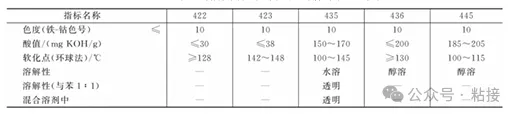
③ Mainly used as a thickening resin for adhesives and sealants.
Rosin pentaerythritol ester
① Name and characteristics
Chinese alias: Pentaerythritol Rosinate; Also known as 142 resin, 145 resin, or 14 resin.
English name: Pentaerythritol ester of rosin.
English alias: resin acids and rosin acids, esters with pentaerythritol.
CAS number: 8050-26-8.
Irregular transparent sheet-like solid. Has good compatibility with resin. Soluble in toluene, acetone, ethyl acetate, dichloromethane, solvent gasoline, etc., insoluble in water, ethanol. Strong antioxidant and adhesive properties.
② Chemical formula or molecular formula and structural formula Molecular formula: C25H34O2. Structural formula:
③ Physical and chemical properties and quality indicators, among which the density of 145 resin is 1.060-1.090g/cm3; Refractive index: 1.544; Acid value: 15-20mg KOH/g. The quality indicators of different grades of rosin pentaerythritol ester are shown in the table

④ Mainly used as a thickening agent for hot melt adhesives, pressure-sensitive adhesives, and SBS solvent based adhesives. Good adhesion effect and significantly improved bonding strength. It also makes the product have excellent heat resistance, aging resistance and good stability, good compatibility and solubility, good surface tension and good color retention.
Hydrogenated rosin pentaerythritol ester
① Name and characteristics
Chinese alias: abbreviated as PEHR.
English name: Pentaerythritol ester of hydrogenated rosin.
English alias: Rosin pentaerythrityl ester, hydrogenated.
CAS number: 64365-17-9.
Light yellow granular or flaky transparent solid. Soluble in toluene, ethyl acetate, acetone, solvent gasoline, turpentine, etc., insoluble in ethanol, water. Has good adhesion and better aging resistance.
② Chemical formula or molecular formula and structural formula molecular weight: 850-890.
③ Physical and chemical properties and quality indicators softening point: 97-102 ℃. Glass transition temperature: 57 ℃. Viscosity: 620mPa · s (160 ℃), 3000mPa · s (140 ℃).
210 rosin modified phenolic resin;
① Name and characteristics
Chinese alias: commonly known as 210 resin.
English name: Rosin modified phenol resin 210.
Light yellow transparent block or granular solid. Has good oil solubility, soluble in toluene, dichloroethane, ethyl acetate, vegetable oil, etc. It has the advantages of high softening point, high viscosity, good stability, compatibility, and oil solubility. The produced paint film has fast film formation, good dryness, high brightness and hardness.
② The physical and chemical properties and quality indicators are thermoplastic resins formed by the condensation of phenol or bisphenol A with formaldehyde, modified by rosin chelation, and esterified with glycerol (pentaerythritol) polyol. The quality indicators of 210 rosin modified phenolic resin are shown in the table

③ Mainly used as a thickening resin for rubber adhesives such as CR, SBS, etc. It can improve heat resistance. Adding stickers, hot melt adhesives, and adhesives to improve the bonding performance of products and reduce costs.
Handbags are indispensable daily necessities in our lives, so the market sales of hot melt adhesive for handbags also account for a large proportion of the entire hot melt adhesive market. Some people buy hot melt adhesive sticks to manually bond handbags, while others buy hot melt adhesive granules to machine bond handbags. Here are […]
In book binding with copperplate paper as the inner page, due to the thin film covering the surface of copperplate paper, there is a high demand for the adhesive used. It is difficult for people to bind books and periodicals with white glue in order to make them more firmly attached to copperplate paper. After […]
Kraft paper board book coverhot melt adhesive pelletsCan it stick? Many hardcover book and magazine factories are most concerned about weak adhesion and cracked book covers when making kraft paper covers. Hot melt adhesive particles, as the mainstream adhesive material for book binding, are fully capable of bonding kraft paper and cover paper. The key […]
Quick print shops often encounter orders with small quantities, multiple sheets, multiple covers, and tight delivery times. A more practical approach than searching for “universal binding glue” is to establish a process for confirmation, trial assembly, and parameter retention before changing orders. This article explains how to reduce rework from daily order taking scenarios. Core […]