
新闻中心
The adhesive field is extremely extensive, and its core characteristic is the ability to achieve adhesive function through various mechanisms such as mechanical anchoring and adsorption. Therefore, any substance with such ability can be considered as an adhesive for use. Numerous adhesives have demonstrated cross material bonding capabilities, such as rubber adhesives that can connect multiple different materials, while epoxy resin adhesives are known for their almost “universal” properties. Except for a few non-polar materials and specific plastics (such as polyethylene and polytetrafluoroethylene), they can firmly bond with almost all substances.
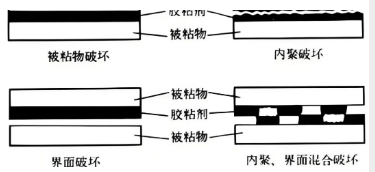
However, in practical applications, in order to achieve the best bonding effect, it is necessary to ensure that the physical and chemical forces generated between the adhesive and the bonded object reach the optimal state. The implementation of adhesive strength is deeply influenced by various factors. Specifically, adhesive strength refers to the adhesive force that a unit of adhesive area can withstand, which includes the cohesive strength of the adhesive layer itself and the adhesive strength between the adhesive layer and the bonded surface. The magnitude of this strength is directly related to the chemical composition of the adhesive, the structural characteristics and properties of the base material, the physical and surface properties of the bonded material, as well as the operating techniques and conditions during the application process.
Physical and mechanical properties of adhesive base materials
The cornerstone of synthetic adhesives is usually synthetic polymer compounds, which exhibit structural diversity and are mainly divided into two categories: thermoplastic and thermosetting.. Further subdivision, thermoplastic polymers can be classified into crystalline and amorphous states based on their ordered molecular arrangement. The complex composition and structural differences have a profound impact on the physical and mechanical properties of synthetic adhesives. Different types of polymer binders endow adhesives with unique characteristics such as adhesion, strength, heat resistance, and cold resistance. Therefore, a deep understanding of the polymer type and structural characteristics of the base material is crucial when designing and selecting synthetic adhesives.
Physical factors affecting adhesive strength
(1) The phenomenon of weak interface layer: During the bonding process, specific surface layers that weaken the bonding effect and lead to a decrease in bonding strength are called weak boundary layers. This phenomenon is not limited to polymer surfaces, but can also exist on surfaces of various materials such as fibers and metals. The formation of weak boundary layers is due to the complex interaction between adhesives, adherends, and environmental factors, or the interaction between two of them. When impurities accumulate near the bonding interface and do not bond tightly with the object being bonded, such a weak boundary layer may form. Therefore, in the event of adhesive failure, although it appears to occur at the interface between the adhesive and the adherend on the surface, it is often the weak boundary layer that first fails.
(2) The key role of adhesive viscosity: The effective infiltration and adhesion of adhesive to the surface of the adhered object is essentially the process of reaching the lowest energy state through the interaction between the two molecules. This process requires that the molecules of the two substances must be close enough, usually with a spacing of less than 5 × 10⁻⁸centimeters. However, due to the difficulty of achieving absolute smoothness on solid surfaces, adhesives need to penetrate into small gaps or cracks on the surface of the adhered object through flow or deformation, while eliminating any air to achieve complete infiltration. In this process, the viscosity of the adhesive becomes a key factor: lower viscosity means better fluidity, which is conducive to infiltration; For high viscosity adhesives, auxiliary measures such as heating and pressure may be required to enhance their wettability.
(3) The necessity of surface treatment of the adhered object:As all material surfaces have a certain degree of adsorption, it is particularly important to treat the adhered object surface appropriately in order to achieve the best bonding effect.. The properties of the surface of the adhesive have a crucial impact on the bonding strength, and poor surface condition is often the main cause of adhesive joint failure. By proper surface treatment, the adhesive strength of metals and other materials can be significantly improved, especially for materials such as aluminum alloys, whose shear strength can even be increased by 25% to 70%. Therefore, optimizing the surface treatment technology of the adhered material is a key step in improving the quality and durability of bonding.
(4) Analysis of internal stress in adhesive parts:The internal stress in adhesive parts mainly comes from two aspects: firstly, the shrinkage stress generated by the volume reduction of the adhesive during the curing process;; Secondly, due to the mismatch in thermal expansion coefficients between the adhesive and the adhered material, thermal stress can be induced when the ambient temperature changes. The presence of these internal stresses can significantly reduce the bonding strength, and in extreme cases, even lead to automatic bonding failure. Internal stress, as an additional force on a unit cross-section, already exists inside the bonded joint when not subjected to external forces. Shrinkage stress originates from volume changes during the curing process, while thermal stress fluctuates with temperature and is temporary.
The internal stress of adhesive parts is closely related to their aging process. During the thermal aging process, the thermal oxygen effect and the release of volatile substances will intensify the shrinkage of the adhesive layer; On the contrary, in humid environments, the moisture absorption of adhesives can cause the adhesive layer to expand, further affecting the distribution of internal stress. It is worth noting that the presence of internal stress may also accelerate the aging process of adhesive parts, especially for epoxy adhesives and polyurethane adhesives, where even small external loads can significantly exacerbate their wet heat aging.
Adhesives with different curing methods are difficult to avoid a certain degree of volume shrinkage. If the volume fails to reach equilibrium during the curing process, subsequent curing will cause internal stress. Due to its low solid content, solution adhesives experience significant volume shrinkage during curing. The volume change during the cooling process of molten polymers cannot be ignored, as the shrinkage rates of polystyrene and polyethylene can reach 5% and 14%, respectively. The volume shrinkage rate of chemically cured adhesives varies depending on the type of reaction, with condensation reactions being particularly severe as some of the reactant molecules are converted into small molecules and escape. In contrast, open-loop polymerization has limited volume shrinkage due to smaller changes in intermolecular distance.
For thermosetting adhesives, molecular movement is limited after gel, especially after vitrification, which makes the curing reaction after gel the main source of shrinkage stress. High functional adhesive systems often generate higher internal stresses after curing, which may affect their adhesive strength. For example, epoxy phenolic resin adhesives exhibit lower adhesive strength compared to bisphenol A-type epoxy resin adhesives.
Therefore, reducing the volume shrinkage rate during the curing process is crucial in the application of thermosetting resins. This can usually be achieved by adjusting the formula, optimizing curing conditions, and using special additives.
Optimization strategy to reduce internal stress of adhesive:
Volume shrinkage and internal stress during curing process:Whether it is solvent based, hot-melt, or chemically cured adhesives, volume shrinkage is inevitable during the curing process.. Especially when the adhesive loses its fluidity and the volume has not yet reached equilibrium, further curing will cause significant volume shrinkage, resulting in internal stress. When solvent based adhesives lose their ability to deform due to solvent evaporation, the internal stress is particularly pronounced. Hot melt adhesives also experience significant volume shrinkage during the cooling process. The volume shrinkage rate of different types of chemical reaction cured adhesives varies due to different reaction mechanisms. For example, epoxy resin has a relatively low volume shrinkage rate due to the small change in interatomic distance during ring opening polymerization; Unsaturated polyester resin and phenolic resin, on the other hand, have higher volume shrinkage rates due to atomic rearrangement and the release of small molecule by-products during chemical reactions.
First, correct a common misconception: corrugated cardboard boxes cannot be tightly sealed, and most of the time it is not a problem with the quality of the glue particles, but rather due to insufficient pressing time, moisture in the cardboard box, improper glue amount or temperature, or the cardboard box being covered with film or […]
Running a business faces enough challenges, so we want to ensure that we provide high-quality hot melt adhesive for your business to ensure your and your customers’ satisfaction. Packaging is an important component of many businesses, but sometimes its benefits are overlooked. Manufacturers rely on packaging to protect products during transportation, serve as a brand […]
Is the problem of falling pages always blamed on glue? Perhaps milling the back is the root cause The most troublesome quality issue for printing factories is the loss of pages in book and magazine glue packaging, and many manufacturers’ first reaction is to replace themhot melt adhesive pelletsModel, glue temperature adjustment, and glue amount […]
Is the stronger the bonding strength of hot melt adhesive, the better? Adhesive force is one of the core properties of hot melt adhesive. Whether the adhesive strength is high enough often affects the application effect of hot melt adhesive. But in practical use, is the stronger the viscosity of hot melt adhesive, the better? […]