
新闻中心
It is crucial to choose the appropriatehot melt adhesivefor each application. The adhesive required to complete a specific task may vary greatly, so it is important to understand which adhesive is most suitable for your application.
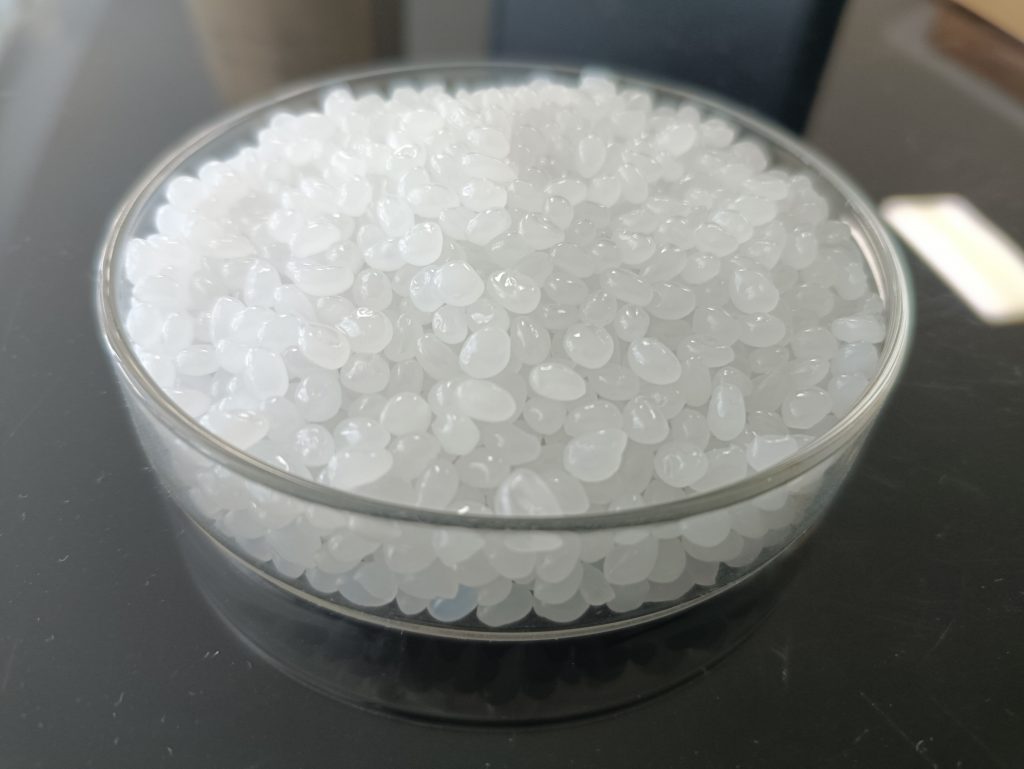
The five commonly used types of main polymer substrates are the main components of our paper boxes and box packaging hot melt adhesives. The most important thing is to determine your adhesive requirements based on performance rather than the base polymer. However, many users and suppliers use base polymers as their hot melt adhesive type labels. If you are already using hot melt adhesive, understanding the main base polymers can help you understand its compatibility.
1) EVA (ethylene vinyl acetate)
EVA is one of the original polymer base materials used in packaging and industrial hot melt adhesive standards. Today, it still produces highly competitive and high-performance packaging hot melt adhesive. This base material provides one of the most extensive properties in almost all current applications and is the best and/or primary choice for many applications. It is a hot melt adhesive suitable for low temperature and room temperature.
2) Polyethylene
These basic polymers are suitable for most paper box, cardboard box, and pallet sealing applications. Adhesive based on polyethylene polymer has low odor, light color, and is usually easy to peel off from metal. If it comes into contact with equipment, it is easy to clean. It is not suitable for substrates that are difficult to bond and is only used at room temperature.
3) Metallocene
Metallocene polymers were introduced in the 1990s, and combining these polymer matrices with other high-quality components can provide higher stability in heating applications and storage temperature strength under extreme cold and hot conditions. This disruptive leap in reducing coking and decomposition caused by thermal exposure, while expanding thermal and cold bonding properties, makes them the fastest-growing polymer foundation since then.
4) APAO (amorphous poly alpha olefin)
APAO adhesive is most suitable for areas with longer opening times or where it needs to be bonded to plastic. These adhesives have soft, sticky and flexible texture, making them an excellent choice for assembling products including adding foam protection corners for corrugated paper packaging and bonding plastic corrugated boxes.
5) Polyamide
These adhesives perform well in situations where high temperature resistance, oil resistance, solvent resistance, or rapid assembly strength is required. This makes them an excellent choice for filters, wood, and other high-performance assembly applications. These adhesives require high application temperatures, typically around 400F, and have thermal stability at this temperature.
Direct answer: FormalHot melt adhesive pelletsThe free sample sending process of manufacturers is usually “proposing requirements → explaining working conditions parameters → confirming sample model and quantity → sending for free (usually SF Express collect or free shipping for the first time) → customer testing on the machine → feedback results before adjustment”. The entire […]
What are the carbides in the glue pot? Why is it necessary to clean up? hot melt adhesive pelletsHeating in the glue pot for a long time will cause the resin and thickening agent to slowly decompose, forming black carbides that deposit on the bottom of the pot and the wall of the rubber tube. […]
Hot melt adhesive technology features Fast solidification speed, solidifying within a few seconds, with the characteristics of heating, melting, cooling, and pasting, convenient for continuous and automatic high-speed operation, improving production efficiency and reducing costs; Hot melt adhesive particles have a 100% solid content, are solvent-free, environmentally friendly, non-toxic, energy-saving, and have no secondary pollution […]
Conclusion: Conventionalhot melt adhesiveParticles are not classified as dangerous goods Conventional EVA and APAO based hot melt adhesive particles are not classified as dangerous goods. It is a solid particle at room temperature, free of organic solvents, with a flash point generally above 250 ℃. It is neither flammable nor explosive, and is not listed […]