
新闻中心
Analysis of aging reasons of EVA hot melt adhesive during use? Many customers encounter a decrease in viscosity and insufficient bonding strength of EVA hot melt adhesive after prolonged use. It is usually considered that the product quality is poor. However, this is not the case. This phenomenon is likely caused by the aging of EVA hot melt adhesive during use.
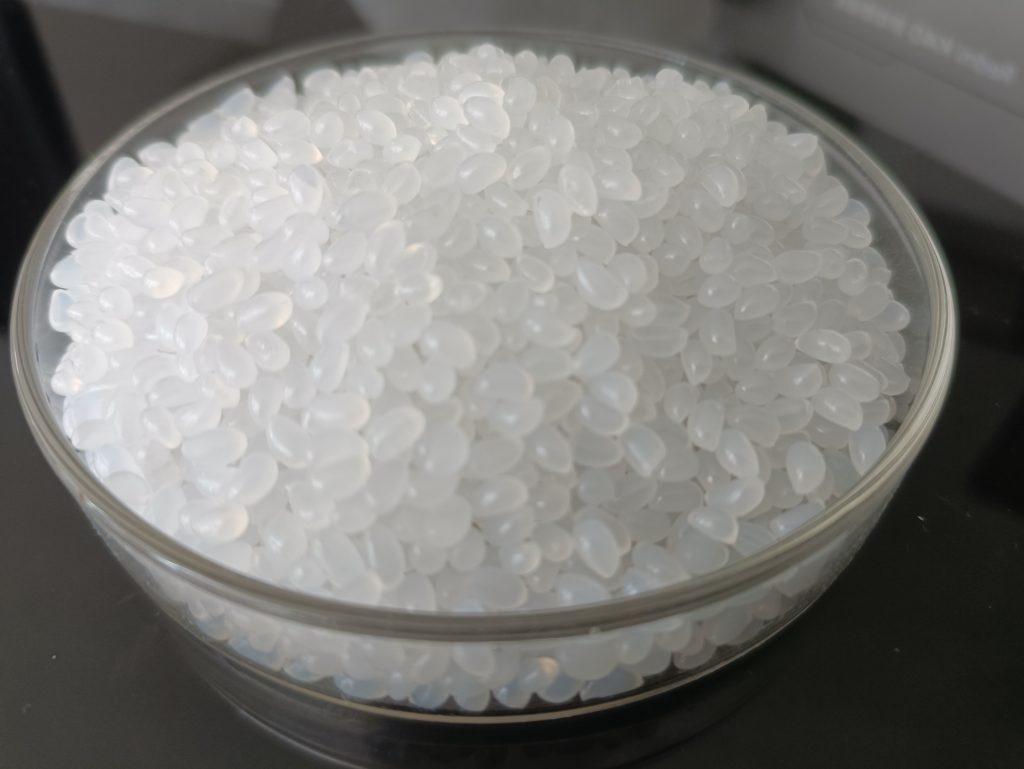
EVA hot melt adhesive must be heated and melted before use. When the amount of adhesive used is relatively slow, it is easy to cause aging problems of hot melt adhesive. If the hot melt adhesive is used slowly in the adhesive tank, it may even be necessary to add new hot melt adhesive to the tank and use it for many days. In this case, the hot melt adhesive in the glue tank is repeatedly heated, causing high temperature oxidation and the formation of vinyl acetate, which forms a rubber like substance or precipitates at the bottom or small pieces scattered in the hot melt adhesive solution.
This phenomenon often creates the illusion of insufficient temperature, resulting in an increase in usage temperature and exacerbating the deterioration of EVA hot melt adhesive. In this case, if glue is still used for bonding, the bonding strength will not meet the requirements.
To avoid this situation, it is necessary to strictly control the heating temperature of the glue tank and regularly measure the actual temperature of the glue solution, compare and calibrate it with the temperature displayed on the temperature controller. The glue tank and other equipment should be cleaned at least once a quarter, especially when there is peeling, the peeled hot melt adhesive should be cleaned thoroughly. In this way, EVA hot melt adhesive can reduce aging and become an efficient, high viscosity, and low-cost adhesive product.
Hot melt adhesive granules are a type of plastic adhesive. Within a certain temperature range, its physical state changes with temperature, while its chemical properties remain unchanged. It is non-toxic and odorless. It is an environmentally friendly chemical product. Easy to package, transport, and store, solvent-free, pollution-free, and non-toxic. Some hot melt adhesives may encounter […]
Although EVA hot melt adhesive is an excellent solution for many industrial applications, it requires careful control of the high temperature during the process to avoid smoke problems. When hot melt adhesives are heated, they inevitably release some smoke. That is the odor detected while working near the hot melt nozzle. Although some smoke is […]
Bookbinding adhesive is a flexible and durable hot melt adhesive used in bookbinding. This combination creates a book that can withstand bending and folding without spine cracking or page pulling. Hot melt adhesive for books and periodicals is divided into book edge adhesive and book back adhesive according to their uses. EVA hot melt adhesive […]
Hot melt adhesive is a type of plastic polymer adhesive. Within a certain temperature range, its physical state will change with the temperature. EVA hot melt adhesive is an environmentally friendly chemical product. Sometimes, when using hot melt adhesive, there may be wire drawing after melting. Affects work efficiency and product aesthetics. So, what is […]