
新闻中心
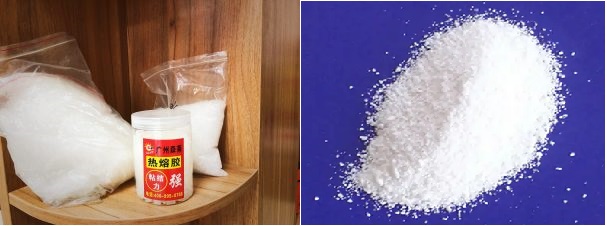
Heavy calcium carbonate (CaCO3) in hot melt adhesive is a commonly used filler that can increase the hardness of colloids, improve their wear resistance and stability, and reduce costs. However, in the hot melt adhesive system, due to its high density, heavy calcium is prone to settling, leading to segregation, that is, the separation of heavy calcium particles from the colloid, which affects the uniformity of the product and the final bonding effect. To reduce or avoid the segregation of heavy calcium in hot melt adhesive, the following measures can be taken:
When using heavy calcium as a filler in hot melt adhesive, it is important to choose a suitable dispersant to prevent the aggregation and segregation of the filler. Hot melt adhesive systems are usually heat sensitive and may experience high shear stress during use, so dispersants need to be able to stabilize the dispersion state of heavy calcium under such conditions. Here are some types of dispersants that may be used in hot melt adhesive systems:
When selecting a specific dispersant, it is necessary to consider the specific components of the hot melt adhesive (such as EVA, polyolefin, etc.), as well as the application environment of the hot melt adhesive (such as temperature, shear conditions, etc.). In addition, compatibility between dispersants and heavy calcium and other components should also be considered to ensure that dispersants can effectively function without affecting the overall performance of the hot melt adhesive.
Book edge glue is an important but often overlooked application of book binding glue. Simply put, it refers to using a thin layer of hot melt adhesive to bond the inside of the cover to the first, last, or final page of the book. Although side bonding is much smaller in volume than spine bonding, […]
Running a business faces enough challenges, so we want to ensure that we provide high-quality hot melt adhesive for your business to ensure your and your customers’ satisfaction. Packaging is an important component of many businesses, but sometimes its benefits are overlooked. Manufacturers rely on packaging to protect products during transportation, serve as a brand […]
Handbags are indispensable daily necessities in our lives, so the market sales of hot melt adhesive for handbags also account for a large proportion of the entire hot melt adhesive market. Some people buy hot melt adhesive sticks to manually bond handbags, while others buy hot melt adhesive granules to machine bond handbags. Here are […]
Why is it harder to bond aluminum foil coated paper than regular paper? Aluminum foil coated paper has a layer of metal film on its surface, which is dense, smooth, and has low surface energy,Hot melt adhesive granulesIt is difficult to wet after coating, and the initial adhesion is much lower than that of copperplate […]