
新闻中心
People have always been confused about the softening point and temperature resistance of hot melt adhesive. Some customers even asked what the melting point of hot melt adhesive is? Now Sunlife hot melt adhesive will answer from a professional perspective, with a detailed understanding of the differences in melting point, softening point, and temperature resistance.
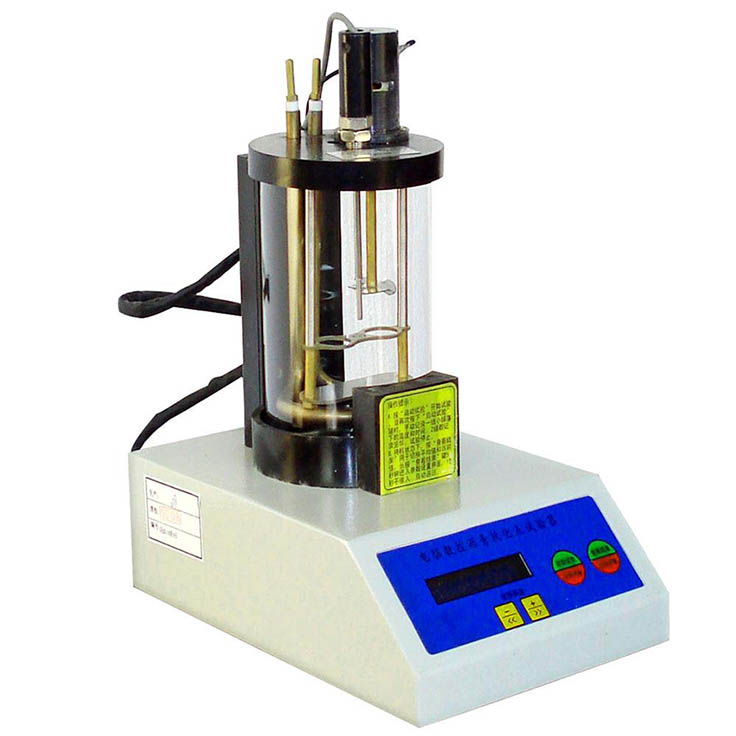
Melting point: The melting point of a substance, which is the temperature at which a solid or liquid of a pure substance reaches equilibrium under a certain pressure. Due to the fact that hot melt adhesive is a mixed substance, it is incorrect to define hot melt adhesive based on its melting point. The melting point that most customers refer to is actually the softening point of hot melt adhesive.
Softening point: Softening point, the temperature at which a substance softens. Mainly refers to the temperature at which amorphous polymers begin to soften. It is not only related to the structure of the polymer, but also to its molecular weight. There are many measurement methods. Different measurement methods often result in inconsistent results. The softening point of hot melt adhesive is usually tested using the global method, with a softening point between 69-82 ℃.
Temperature resistance: It is an important technical indicator of hot melt adhesive. It refers to the temperature at which the adhesive properties of hot melt adhesive begin to change after it is firmly bonded. Ordinary EVA hot melt adhesive is suitable for ambient temperatures ranging from 0 to 35 ℃. Special models of hot melt adhesive can withstand high temperatures of 80 ℃, 120 ℃, 140 ℃, and 170 ℃. The low temperature resistance is generally -10 ℃, and some hot melt adhesives can reach -20~-30 ℃. Ordinary hot melt adhesive can meet the normal climate range.
First answer: Having more fine powder does not necessarily mean poor quality, but it is worth asking a question Hot melt adhesive granulesA small amount of fine powder at the bottom of the bag is a normal phenomenon. Particles rub against each other during granulation, cutting, conveying, bagging, and long-distance transportation, inevitably producing powder. The […]
EVA hot melt adhesive is a new type of adhesive developed to meet the requirements of being harmless, energy-saving, resource-saving, and environmentally friendly today. The characteristic of EVA hot melt adhesive is that it is 100% solid and does not contain water or other solvents, so there is no environmental pollution or residual solvent toxicity […]
EVA hot melt adhesive is different from regular cold melt adhesive. According to its characteristics, the following points must be mastered and noted during use: 1、 Understand and master the models and technical performance (including technical parameters) of each EVA hot melt adhesive. Different types of hot melt adhesives have different opening and curing times. […]
1) hot melt adhesive for cartons is a common adhesive used in the sealing of boxes and cartons. 2) This is about sealed flaps. The application of adhesive is usually the end process of the production line and involves applying the adhesive at high temperatures to open the fins, and then bringing the fins into […]